
Reputation Protocol Prepares for October Token Unlock
 By Kristjan Tamm · Sep 20, 2026 · 3 min read
With its token generation event completed on September 8, a Base-based onchain credibility system is currently navigating the gap before its upcoming October 8 token unlock. The anticipated distribution date will conclude a 30-day lock period for participants in the project's recent public auction. Once the assets become transferable, market focus is expected to shift away from early funding metrics and toward the actual adoption of onchain reputation infrastructure.
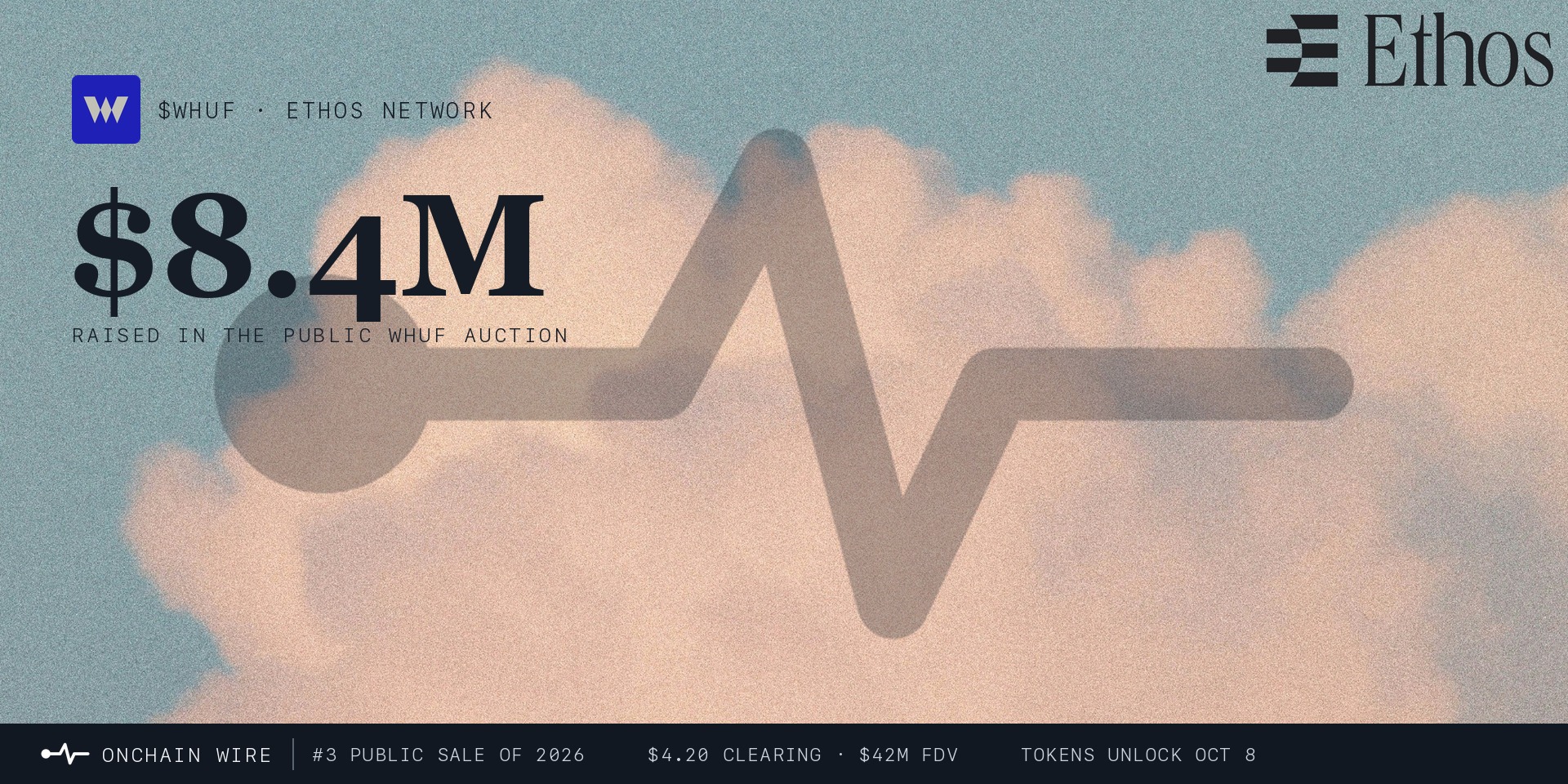
The protocol, developed by Ethos Network, recently closed the third-largest public token sale of 2026. The WHUF token offering was structured as a uniform-price English auction using USDC and powered by Sonar. Over three days of bidding, the event attracted 1,560 participants and accepted $8.4 million in commitments. The auction achieved a final clearing price of $4.20 per token, establishing a fully diluted valuation of $42 million for the project. According to official disclosures, $6.6 million of the bids were placed at the auction's $99 million valuation cap.
During the sale, 20 percent of the total token supply was sold to the public, a figure significantly higher than the 2026 median token sale allocation of just 2 percent. Published sale terms indicate that the remainder of the supply is allocated across early supporters, team members, bug bounties, treasury operations, ecosystem development, and contributor rewards. Prior to the public auction, the project had secured approximately $1.75 million in pre-seed funding.
Testing Web3 Credibility
As the October 8 unlock date approaches, industry observers emphasize that the true test for the protocol will be its integration across the digital asset sector. The Ethos application is already live on the Base network, designed to provide a portable credibility score backed by economic penalties, attestations, vouching, and reviews.
This model attempts to solve a persistent identity problem in the cryptocurrency space, where wallets can be instantly created, social media accounts can be purchased, and scammers can easily rebuild their online identities after a failure. By shifting away from anonymous wallet histories, the economically backed reputation layer is targeting integrations with exchanges, marketplaces, lending applications, and decentralized autonomous organizations.
The concept is also expanding to include artificial intelligence. As autonomous software increasingly transacts onchain, networks are expected to need reputation systems capable of evaluating whether an AI agent should be trusted, rather than just identifying who controls a specific wallet.
However, the transition from a highly capitalized auction to a functional product presents distinct challenges. TokenRecon reports that while the $8.4 million in auction commitments offers a measurable signal of market interest, this capital should not be confused with product adoption. A primary concern is whether the reputation scores will become genuinely portable across different Web3 applications or remain mostly useful within the immediate ecosystem.
Furthermore, the introduction of token incentives carries the risk of distorting the reputation system, potentially encouraging users to optimize their onchain activity for rewards rather than building genuine credibility. Following the October unlock, the critical metrics defining network-market fit will be third-party integrations, active users, retained participation, and the total volume of economic activity relying directly on the credibility scores.